Payswiff SET — Merchant Onboarding
Overview
SET is an omni-channel payment collection app for small and medium merchants in India. We redesigned merchant onboarding and device activation, cutting it from 15 days of paperwork to 15 minutes on a phone.
- UX/UI Designer
- Lead Designer & 2 UI/UX Designers
- Android / Mobile
- 8 Months
Background
The Inception
Payswiff is an Indian payments company focused on Payment Gateway and POS products for SMBs. It also white-labels devices and software for banks and payment service providers.
With the Digital India initiative, transactions were moving digital fast. Everyone from children to grandparents was on a smartphone, and merchants of every size were accepting cards, QR and other digital payments. Payswiff wanted to grow its POS sales and merchant base and get a piece of that market.
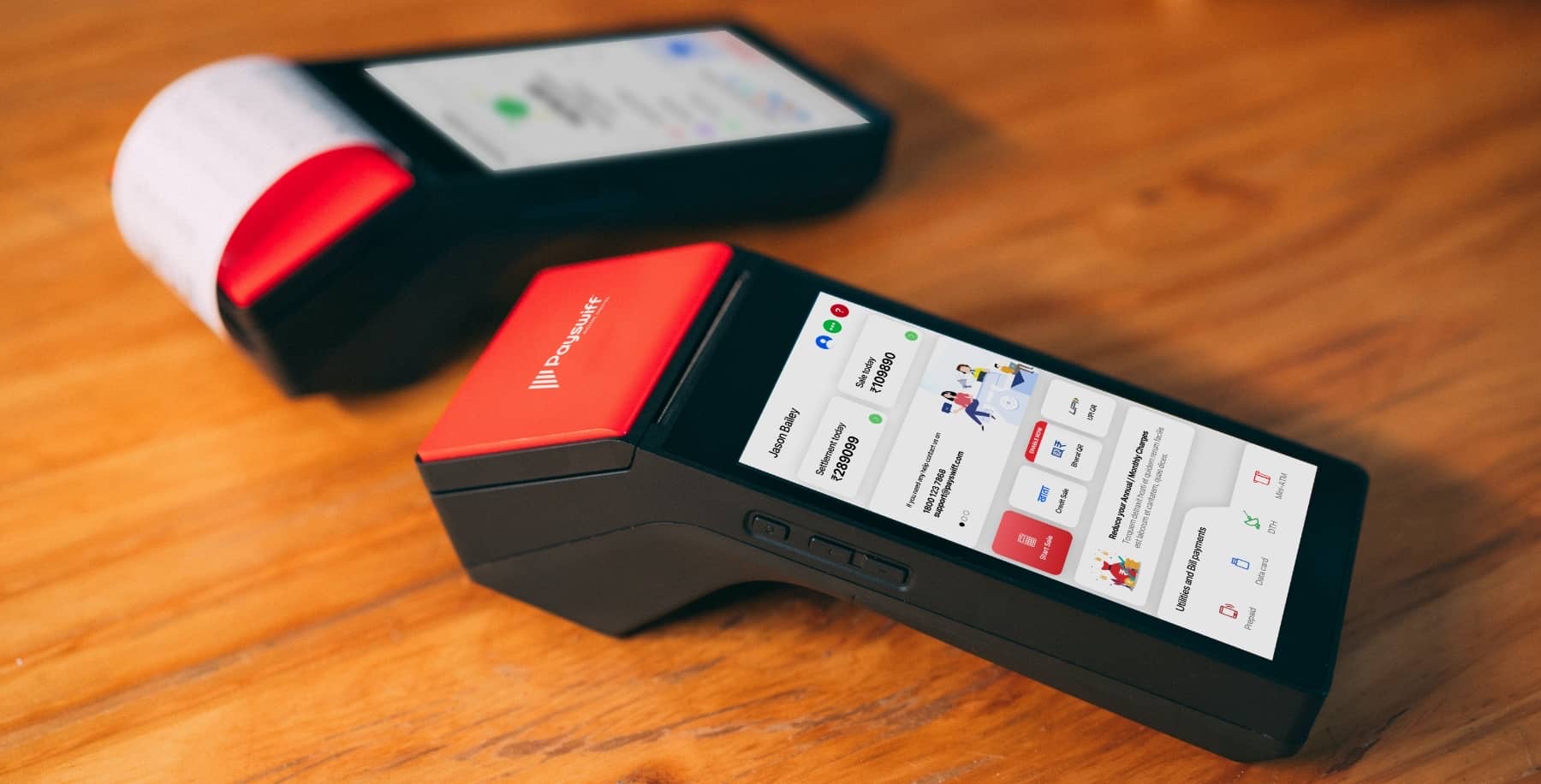
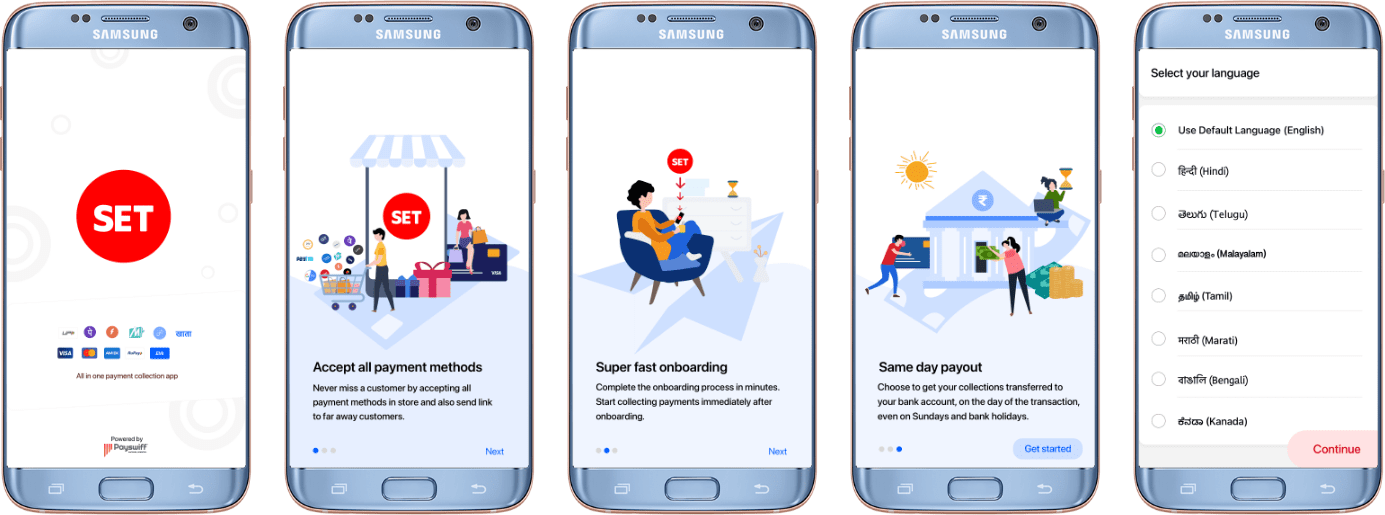
While my manager and I were brainstorming, we landed on the idea of an omni-channel payment collection app. That became Payswiff (formerly Paynear) SET: one app where small and medium merchants collect payments by Debit and Credit Card, UPI, PhonePe, wallets, EMI, pre-auth and Khaata, with extras like recharges, bill payments and bus ticket booking.
Where it came from: Paynear One
Paynear One was the companion app for the Payswiff mPOS, used by 20,000 merchants across India. It connected to the mPOS device over Bluetooth to complete transactions and also offered recharges, bill payments and bus ticket booking.
Market analysis (2018)
A huge, under-served market
SME units in India, ~30% of GDP
63.4M
Retail digital transaction target, 2017–18
25B
India POS terminal market forecast by 2022
$724M
India’s SMEs employ about 460 million people and make up 33.4% of the country’s manufacturing output. The government had set a target of 25 billion retail digital transactions for 2017–18, up from just 9.6 billion the year before.
The India POS terminal market stood at $235.57 million in 2016 and was forecast to grow at more than 11% CAGR to $724.14 million by 2022, driven by the government’s push to digitise the economy.
Competitor analysis
Verifone, Ingenico, Ezetap, Mswipe, MobiSwipe, PayU Money, ePaisa, Pine Labs and PAX were all selling POS, and a few had a tech play. Some had deep market penetration, others just enough to survive, each with its own USP. But no one was addressing the problems merchants actually had.
Research
Empathy first
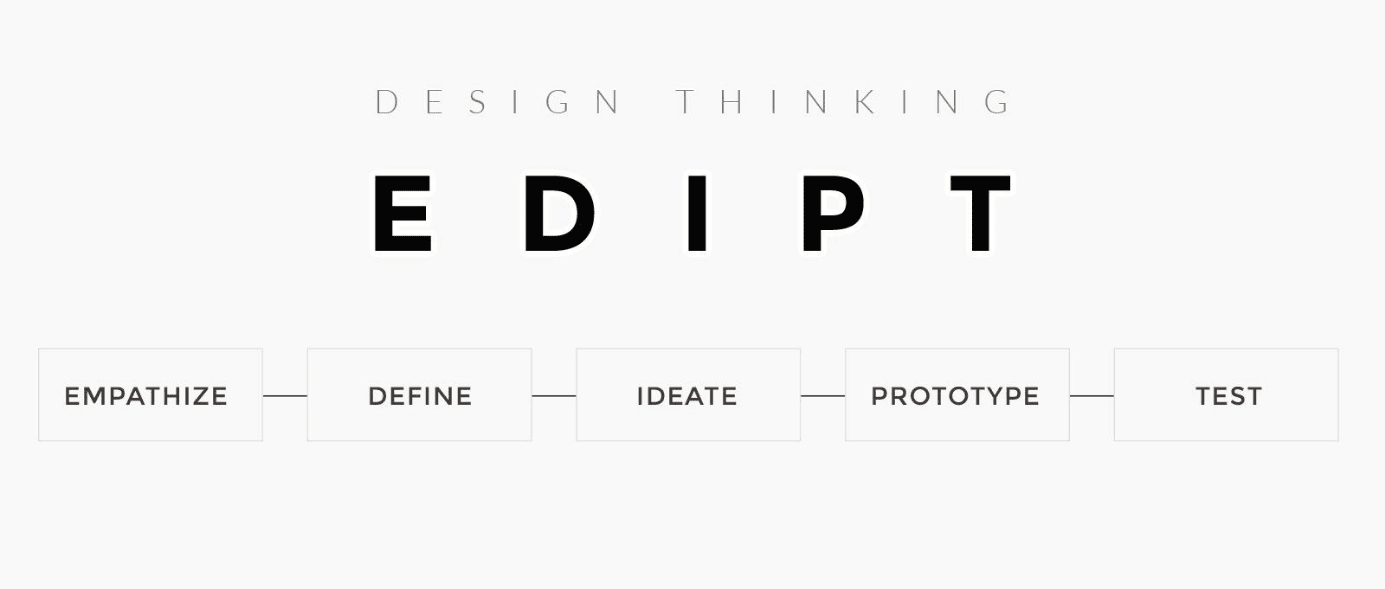
We followed the design thinking process, EDIPT: Empathize, Define, Ideate, Prototype and Test. In the empathy stage we went out to understand how merchants think, then built profiles of our typical users.
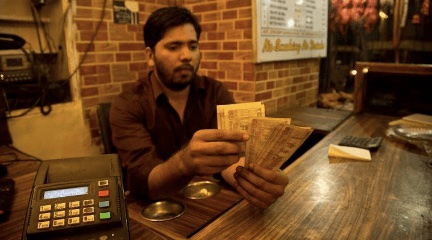
Srikanth
36 · Hyderabad · Runs a veg restaurant · 12th passed
Goals: Make sure his food tastes good, offer more payment methods, avoid cash-flow problems.
Tech: Uses a smartphone, already has a POS device, watches YouTube in free time.
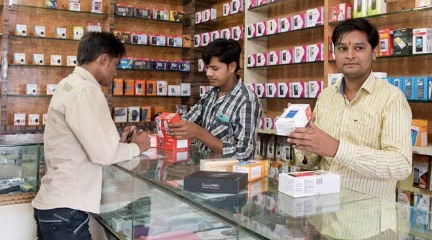
Mohan
45 · Hyderabad · Runs a mobile shop · 10th passed
Goals: Grow his customer base, feels insecure about cash, is just getting digital.
Tech: Speaks Telugu and Hindi, uses a smartphone, accepts digital payments.
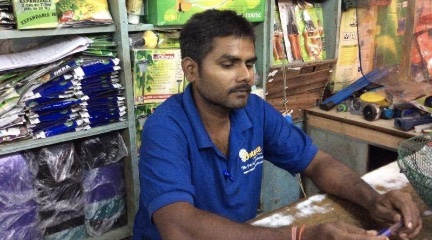
Vijay
37 · Hyderabad · Runs a fertiliser shop · B.Sc Agriculture
Goals: Interested in new technology and business opportunities, wants steady cash flow.
Tech: Speaks Telugu and English, has a smart TV at home and shop, already owns a POS device.
User interviews and surveys
Our inside and on-foot sales teams surveyed nearly 100 merchants, both loyal customers and non-customers. 90% of the surveys came back with the same problems, so we knew we were heading in the right direction. They also showed that Payswiff had a poor reputation for customer service, payment failures and settlement delays, and that we had to win that trust back.
Merchants surveyed by phone and on foot
~100
Reported the same problems we found
90%
Merchant personas defined
3
Identify problems
More than one payment app
Putting every payment method in one place wasn’t the only thing merchants needed. In the field, we found the bigger pain points.
Slow device onboarding
Getting a POS machine meant manual documentation and took anywhere from 15 to 60 days.
Payment failures and settlement delays
Failed transactions and late settlements hurt merchants' cash flow and their trust in the brand.
Fragmented, desktop-bound tools
Merchants juggled multiple PSPs, faced poor service and had no portable, mobile-based software.
Define
Problem statements
Decrease onboarding and device activation time, and respond fast to service requests.
Decrease payment failures and deliver faster settlements.
Omni-channel payment collection, with all of it happening in one mobile app.
Design process
15 days down to 15 minutes
We couldn’t solve every problem at once, so we split the work into multiple sprints while still designing with all of them in mind.
With the data we had, convincing management was easy; they were excited too. The harder part was the team and timelines. Our tech team was busy with other internal and external projects, so we persuaded managers to free up a few people. Once we had a team, there was no turning back.
The first problem: onboarding and activation time
We went back to research and mapped the manual process in detail with a time-and-motion study, then built workflows for how onboarding happened and how it could be simpler.
Before — 15 days minimum
- Merchant calls and raises a request for a device.
- A sales person visits the merchant.
- An executive collects documents based on business type.
- A verification team verifies the documents.
- An agreement is generated once documents are verified.
- The executive gets it signed and hands over the device.
- A separate team activates the device.
After — 15 minutes maximum
- A sales person approaches the merchant in their shop.
- The merchant is convinced on features and rates.
- SET is downloaded on the merchant’s phone.
- Minimal documentation, verified on the spot: PAN and GSTIN checks, bank account penny drop, and OTP-signed agreement.
- The device is activated instantly and the first transaction is completed.
Technical challenges
- PAN and GSTIN verification through third-party integrations.
- Bank account verification via penny drop.
- On-the-fly agreement generation with OTP-based signing.
- Liveness check using a selfie, with a backup built for every service in case one failed.
Wireframes
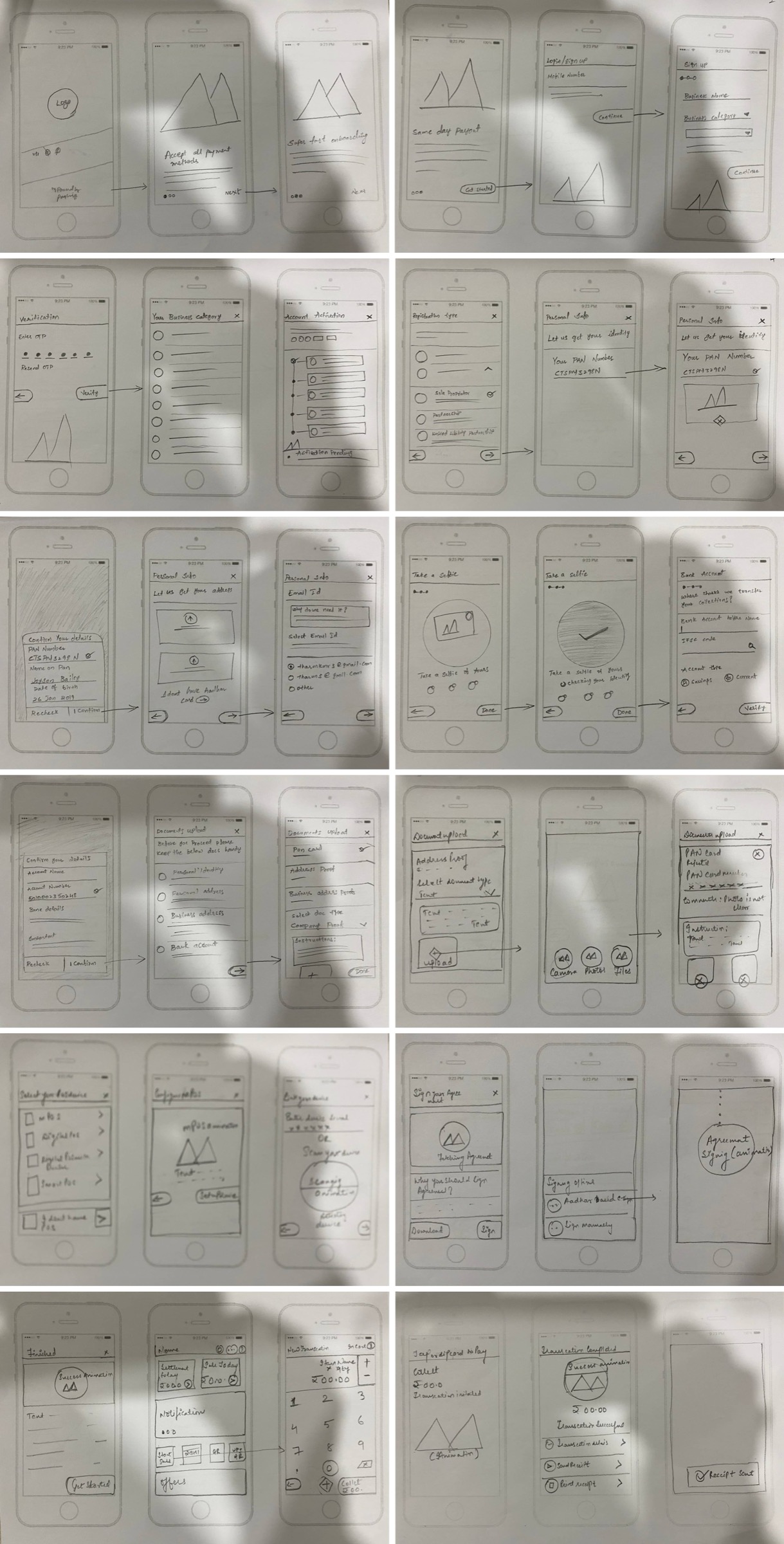
With that clarity we moved to design, starting with paper wireframes for every step of the flow.
Final design
Final designs
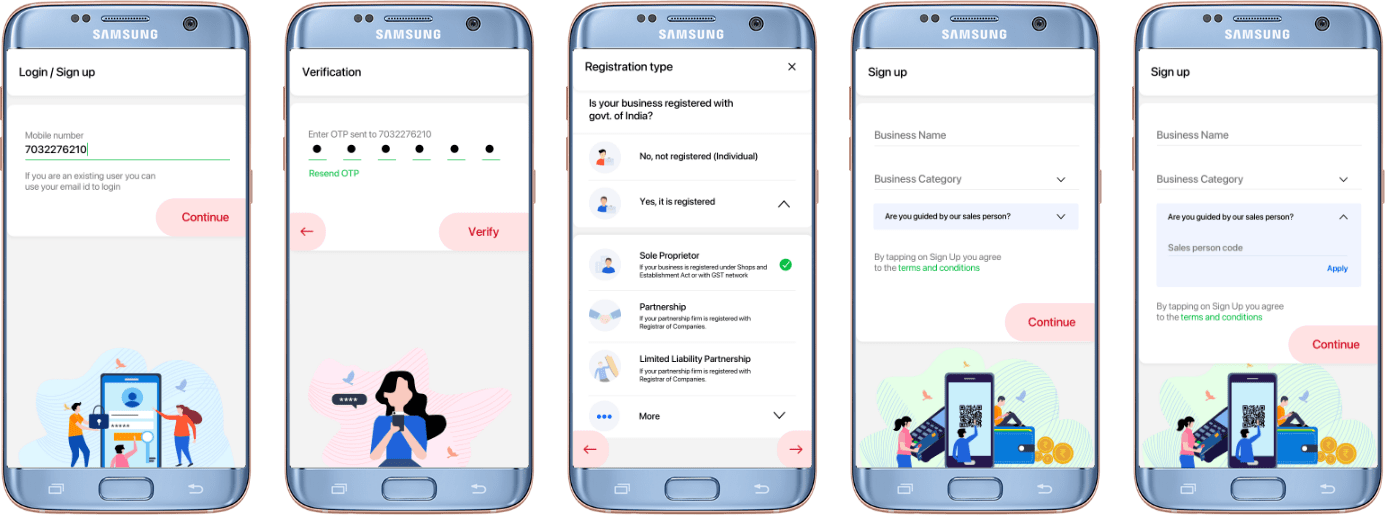
Sign up and business type
Phone number and OTP login, then the merchant picks whether the business is registered and its type.
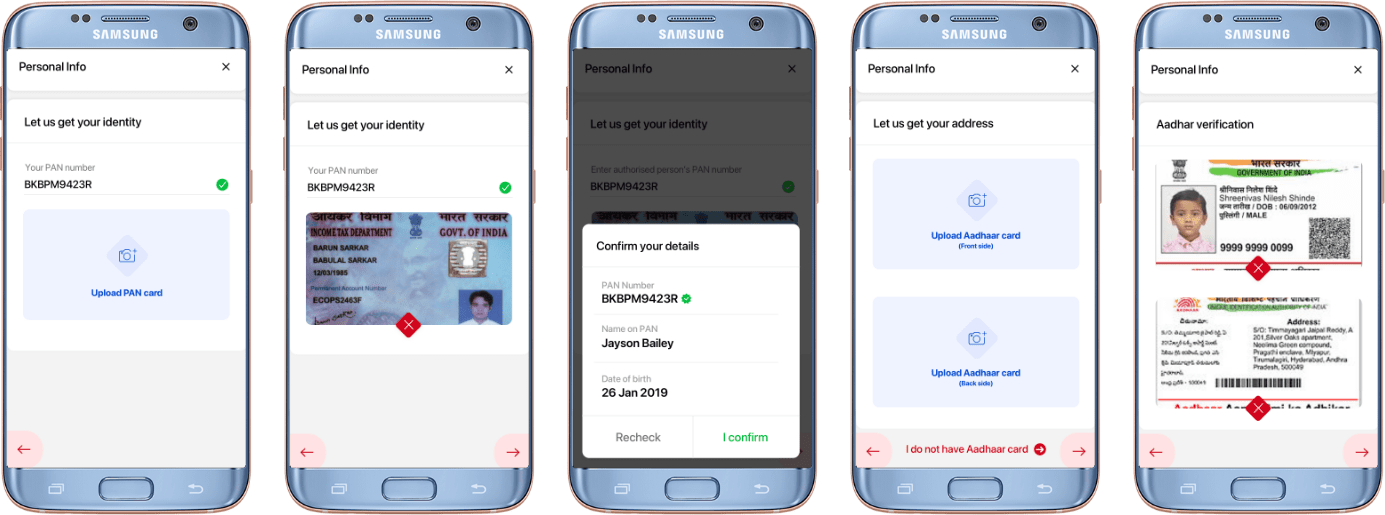
Identity, verified on the spot
PAN and Aadhaar are captured and auto-read, followed by a selfie liveness check, so no one has to collect paper documents.
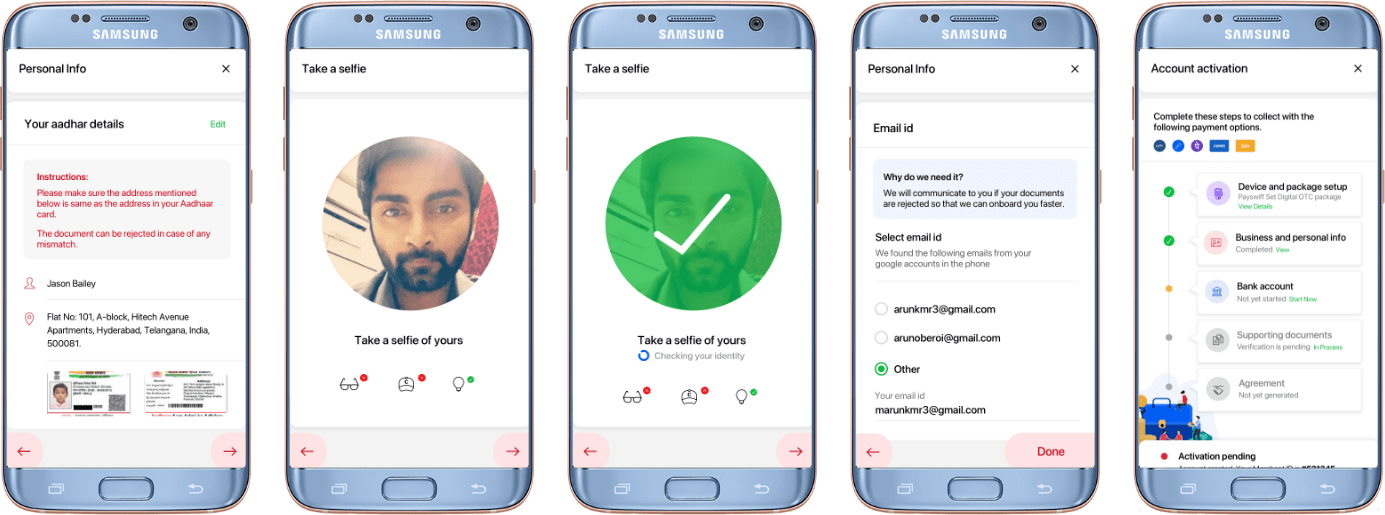
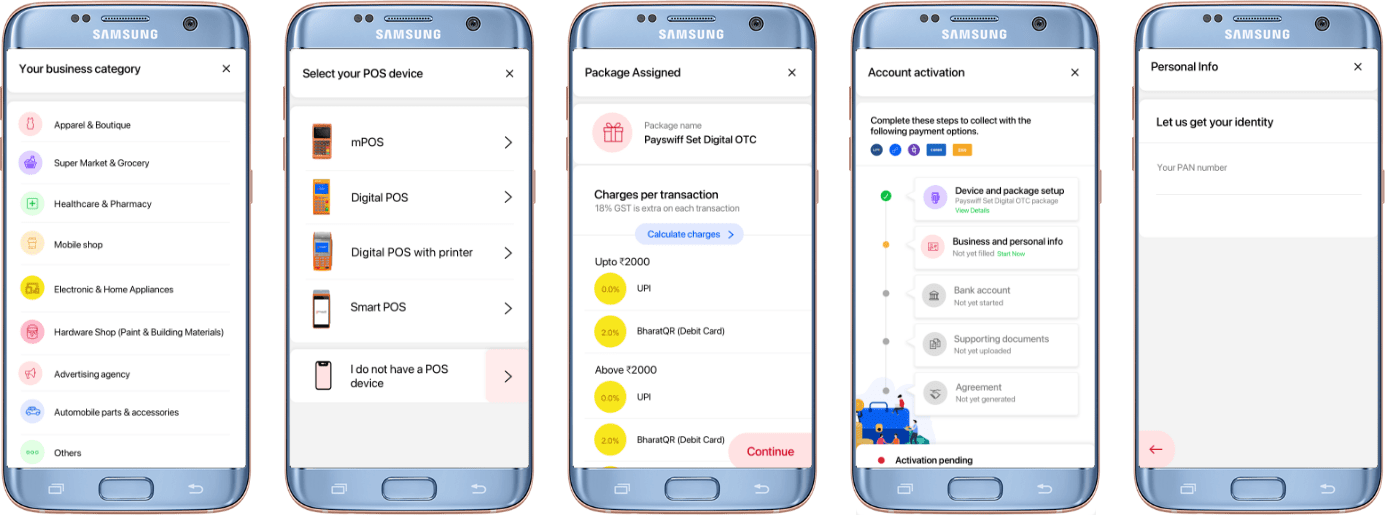
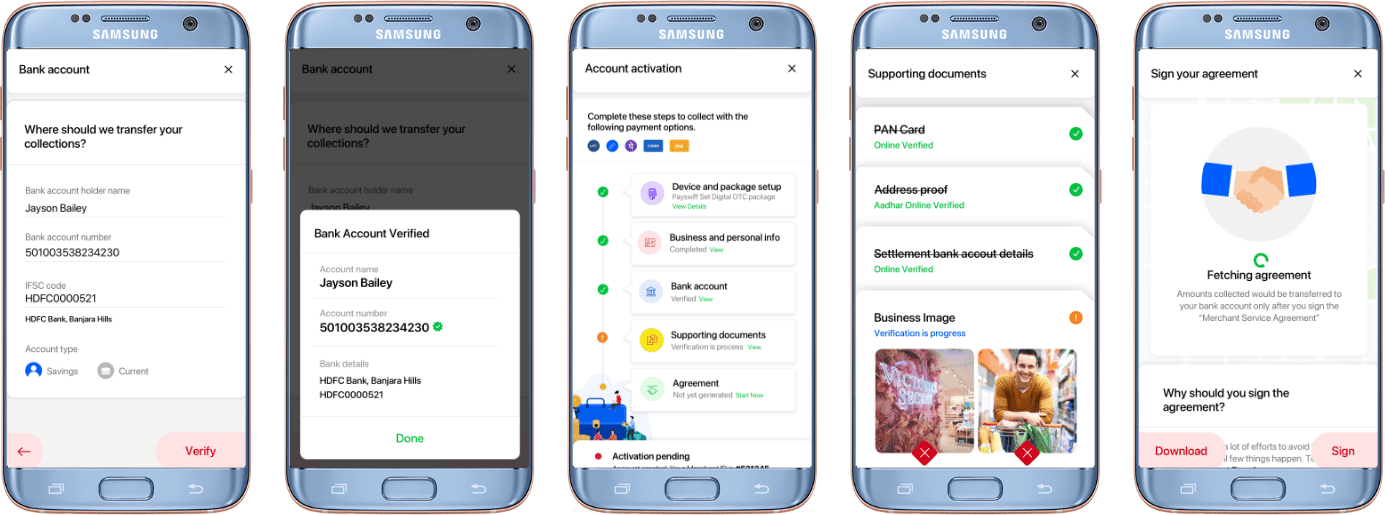
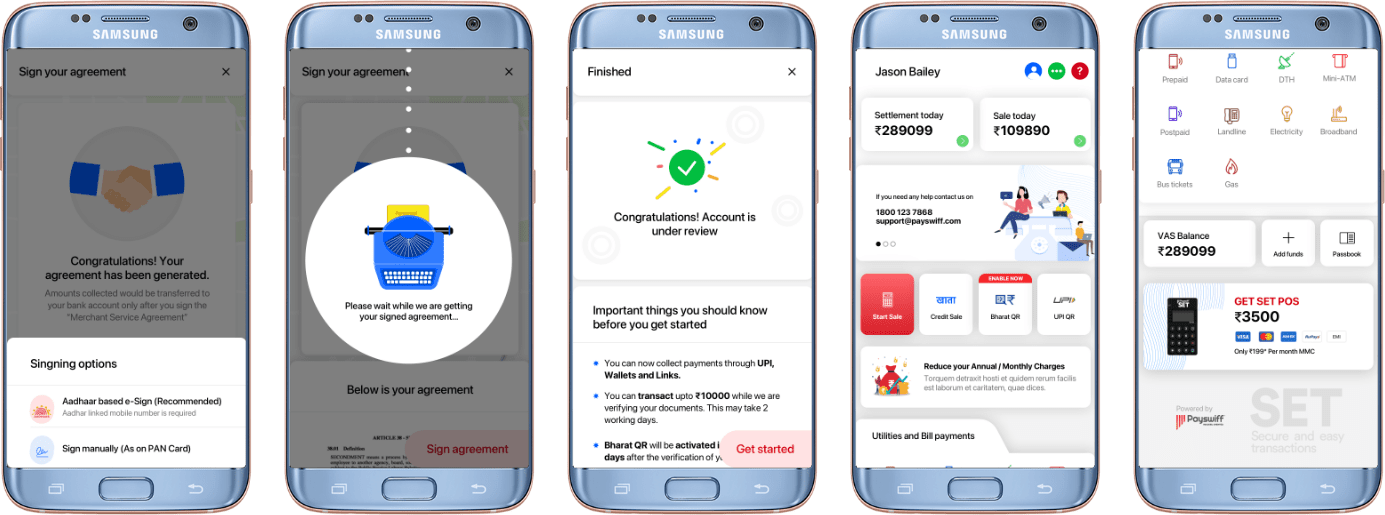
Bank, agreement and go live
The bank account is verified via penny drop, supporting documents are checked, and the agreement is generated and signed with an OTP. The merchant lands on the home screen ready to collect payments.
User testing
We tested internally with our team and with non-technical staff across the organisation, collected a lot of feedback, and iterated several times to make it usable.
Results
Results and achievements
For the business
Onboarding, down from 15 days
15 min
Calls to customer support
−50%
Increase in devices sold per sales person
380%
For growth
Downloads in the first 15 days
5,000
Downloads with zero marketing budget
100K+
Banks using the white-labelled app
~10
- Sales people went from selling 7–8 devices a month to nearly 30.
- Merchants across languages, including semi-literate users in villages, used the app without issues.
- First in the market with same-day settlement and holiday payouts.
- We rebuilt the brand’s trust, and the app became the face of the company.
“SET hai toh business SET hai!”